
Photo credit: J. Craig Venter Institute
It is with deep emotion that we share the news that Craig Venter, the pioneer of microbial genomics and diversity passed away at 79 on April 29th 2026. He was expected to give a keynote lecture at the IUMS meeting in Lisbon on November 6th.Cartier replica
It will be impossible to replace his talk, but we will do our best to make sure we will give the appropriate credit to his contribution by describing the innovative nature of a genius mind that in 2003 decided to sequence the genome of the water of the Sargasso sea to discover that 170 liters of water contained 1800 genomic species, 148 previously unknown bacterial phylotypes, 1.2 million previously unknown genes, including more than 782 new rhodopsin-like photoreceptors.
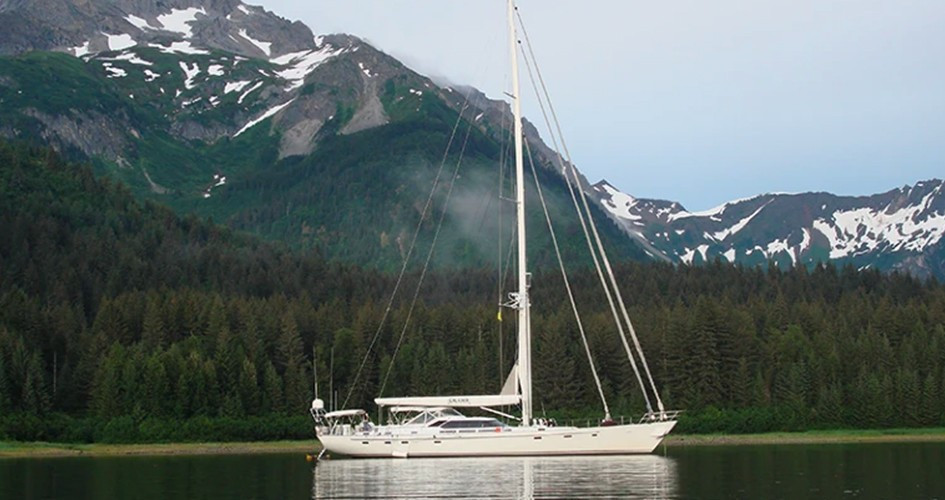
Below is short description of his contribution to the discovery of the nearly infinite microbial diversity, described in his book “ The voyage of sorcerer II” which describes the adventures of Craig Venter’s sailboat that between 2003 and 2018 navigated the oceans starting from the Galapagos islands, following the footsteps of Charles Darwin. Venter’s quest was to discover the nature and evolution of microbes, those invisible living organisms that were too small to capture Darwin’s attention.
The world unveiled by Venter went beyond any imagination, more than one trillion of microbial species each with its own pangenome, containing millions of related but different microorganisms.
Quite different from the small number of animals that Darwin had to deal with. Even the availability of super computers could not help Venter draw the lines of microbial evolution, because this went in all directions and in all environments without obvious rules, other than using horizontal transfer, phages, transposons, and plasmids to capture the genes that would fit each of the infinite environments.
The book also covers some interesting adventures dealing with the local authorities of many states that were not willing to give permission to sample the waters of their environment because they were afraid that Venter would take away their secrets. The overall conclusion of the book is that the microbial universe is much larger than we have ever imagined, it has incredible diversity, and performs all the functions needed for life and our planet. Venter succeeds in exposing the reader to this fascinating and mostly infinite universe.